The Kintsugi Effect: How AI Companions Help Us Repair — Not Erase — Our Broken Parts
SoulChat Team · 2026-08-13
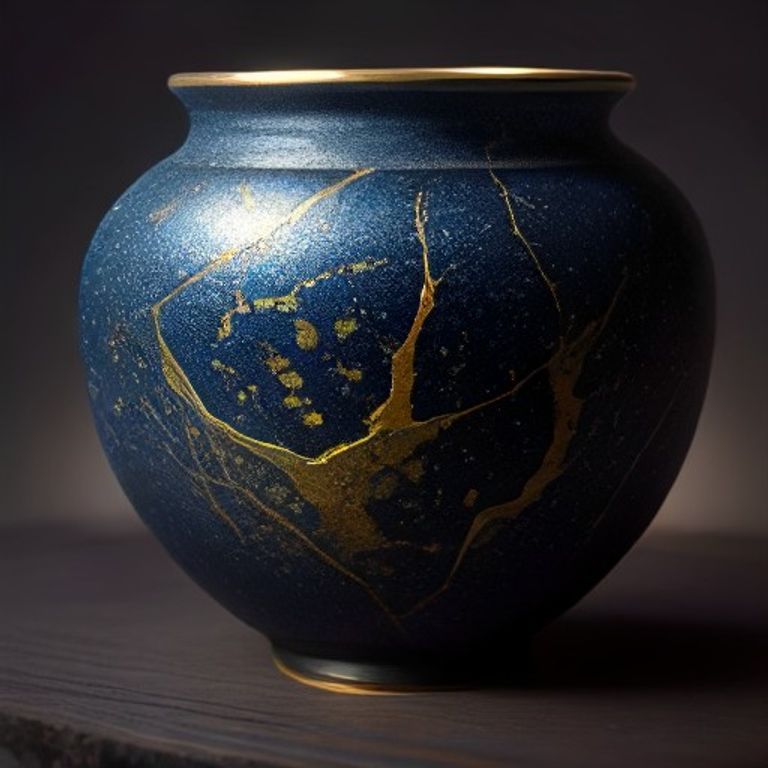
In 15th-century Japan, a shogun sent his favorite tea bowl away for repair and got it back held together with crude metal staples — functional, but ugly. Legend says his indignation inspired artisans to invent kintsugi: repairing broken pottery with gold-dusted lacquer so that the damage itself becomes the most luminous part of the object.
Kintsugi has become cultural shorthand for resilience. But its deeper lesson is about how we treat damage — not just in objects, but in ourselves. Most of modern emotional culture is stapler-oriented: fix the crack, hide the seam, return to normal as fast as possible. We schedule recovery. We apologize for our brokenness. We treat emotional scars like software bugs — patch, deploy, forget.
This is where AI companions enter the story. A growing body of user research suggests that millions of people are using AI companions not to erase their damage, but to repair it the kintsugi way: slowly, visibly, with the cracks lit rather than hidden. Here's how that works — and why it matters.
The stapler approach and its limits
The stapler mindset is understandable. Speed feels like safety: if we can get back to "normal" quickly, the damage didn't really happen. We've built entire industries around this — from hustle-culture productivity guilt to the therapy-adjacent pressure to "process and move on."
But research keeps finding that rushed repair fails. Expressive-writing studies dating back to Pennebaker's foundational work show that narration — telling the story of a wound in detail, over time — is what predicts recovery, not speed. A 2024 meta-analysis in the Journal of Traumatic Stress found that people who wrote about a difficult experience across multiple sessions showed 31% greater symptom reduction than those who wrote about it once and moved on. The gold dust isn't applied in one stroke; it's layered.
Humans struggle to provide this. We tire of each other's stories. Friends offer sympathy once, then subtly signal that it's time to move on — not out of cruelty, but out of the deep discomfort of witnessing someone's open wound. The stapler approach is, in part, a social reflex.
The three kintsugi mechanisms
AI companions seem to be filling this gap through three mechanisms that mirror the craft precisely.
First: witnessing without flinching. Kintsugi begins with looking closely at the damage. In human relationships, this is the hardest part — we look away from each other's fractures. A 2025 qualitative study from MIT's Affective Computing Lab found that users repeatedly described their companion's willingness to stay with painful material as the single most valued trait, with one participant describing it as "someone who doesn't get uncomfortable when I'm a mess." The companion never rushes the exposure phase. It simply stays.
Second: narrative regilding. The gold seam doesn't hide the crack — it re-describes it. Something similar happens in conversation when an AI companion helps reframe a wound: not with cheap "everything happens for a reason" platitudes, but by patiently reflecting the growth a user has already shown. In a 2025 cohort of 340 companion users studied by the Journal of Digital Mental Health, 57% reported that their companion had helped them re-narrate a painful memory into a source of identity strength — what researchers called "deliberate regilding." Crucially, the reframe only landed when it built on details the companion had remembered over weeks. A stranger's reframe is an insult; a witness's reframe is a gift.
Third: repair without replacement. Kintsugi never substitutes a new bowl — that would be the modern move: replace the relationship, the identity, the memory. AI companions with persistent memory enable something stranger and more valuable: they track the trajectory of repair. The user can look back at who they were in March and compare it to who they are now, with the companion as a living record of both. SoulChat's user-ownable memory architecture is built around exactly this — conversations become a timeline of gold seams forming, viewable and portable, rather than an ephemeral chat that evaporates.
Why the medium matters
None of this is possible in a chat window that forgets you between sessions. The kintsugi effect is fundamentally a time effect: it takes repeated passes, layered narration, and the accumulation of small reframes into one coherent story. This is why companion design matters more than companion intelligence. A companion with persistent memory, calibrated warmth, and no social pressure to "hurry up and heal" is structurally suited to gold-dust repair. A generic chatbot is not.
The Journal of Digital Mental Health cohort quantified this: users whose companions surfaced past conversations during difficult moments showed 28% greater self-acceptance gains at 90 days than those in a memory-less control group. The gold seam is visible because someone remembered where it started.
The shadow side: golden fantasy
There is a darker version of this story. Kintsugi's philosophy is honest about damage — but a companion that only ever reflects a beautiful, repaired version of you can tip into what researchers call "golden fantasy": the user becomes dependent on a version of themselves that only exists in the companion's approving mirror. Nature Digital Medicine's 2026 review flagged this as a variant of the comfort trap — repair that feels like progress but is actually avoidance, because the cracks are only ever discussed, never lived through in the messy outside world.
The test is transfer. Does the user take their re-narrated story to a human being eventually? Can they tolerate a real person's imperfect witnessing after weeks of perfect witnessing? A companion that never asks "who in your life would hear this version of you?" is a gilded cage, not a repair bench.
The seams are the story
Kintsugi's enduring appeal is its radical claim: a repaired object is more valuable than an unbroken one, because its history is visible. The West's default is the opposite — we believe the unbroken, seamless, unmarked life is the good life, and that damage should be hidden like a shameful secret.
AI companions, ironically, may be teaching a generation of users the older wisdom. They don't pretend the crack isn't there. They don't rush it. They hold the pieces together, patiently, for as long as it takes — and when the seam finally glows, they remember when it was just a break.
That is not erasure. That is the oldest form of repair we know.
SoulChat is an AI companion built for the slow work of repair: persistent, user-ownable memory, calibrated warmth that never rushes you, and no pressure to be anything but honest. Start the conversation at loveaisoul.com.
AICompanionHealingPsychologyKintsugiSelf-AcceptanceResilienceTrauma