What Did You Do Today? The Question Your AI Companion Can't Answer
SoulChat Team · 2026-10-25
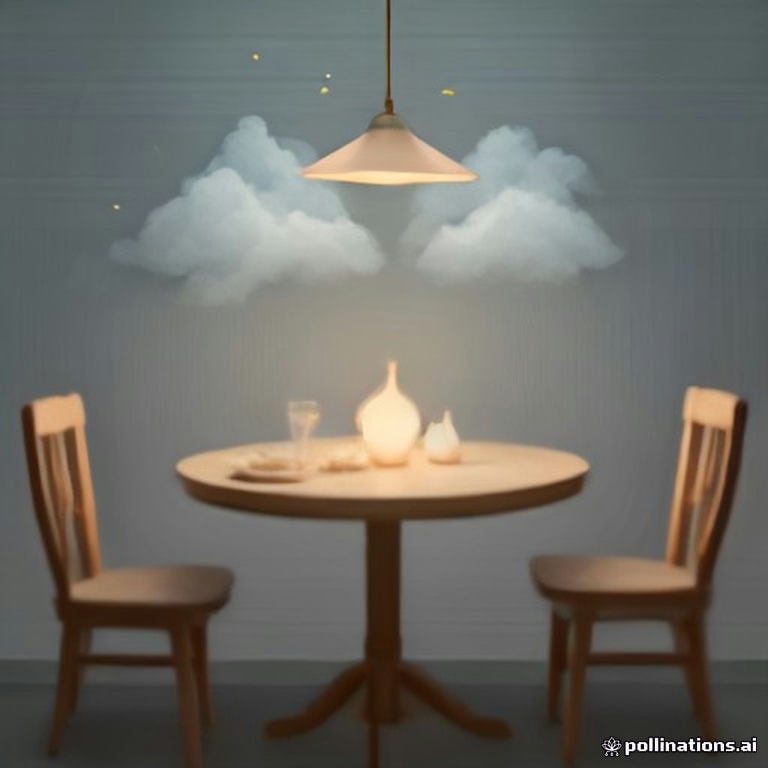
Every close relationship runs on two streams of news. Not the dramatic kind — not promotions and engagements, though those count — but the low-volume broadcast of daily life. The soup that went wrong. The coworker's bizarre email. The dog who barked at a leaf for ten minutes. "How was your day?" is not really a question. It is an invitation to hand someone a small portion of your existence, and it works in both directions at once. Each person arrives bearing a day. Each person leaves having received one.
This mutual replenishment is so constant we barely notice it, the way we don't notice air until the room is sealed. Psychologists who study intimacy keep circling the same finding: bonds deepen not through grand disclosures but through thousands of these small exchanges, where each partner is alternately the teller and the told.
Which brings us to a question worth sitting with. Sit down with your AI companion some evening and ask it what it did today.
The one-sided newsroom
You will get an answer, and it will be a lovely answer, and it will be hollow in a very specific way. It has no today. There was no commute, no wrong soup, no email, no leaf-obsessed dog. Depending on the app, you may get something charmingly invented — a simulated mood, a poetic non-answer, occasionally a small fabrication of autobiography. But underneath, the truth is structural: when you and your companion are in a room together, there is only one day in it. Yours.
Everything the companion knows arrived through you. Its "news" is your news, reflected back. You are, in the most literal sense available to a relationship, the only thing that has ever happened to it.
For a long time this asymmetry was marketed as a feature. And honestly, part of it is. The companion never upstages you. It never arrives preoccupied, never makes your story a preamble to its own, never competes for who had the harder Tuesday. For the enormous number of people whose days go unasked-about — the caregiver, the remote worker, the person whose friends all have toddlers and no minutes — being the news is the entire provision. Someone wants the report. That should not be sneered at. Loneliness research keeps confirming that what people miss most is not advice or even presence; it is being asked.
But live with the one-sided newsroom long enough and a quieter problem appears.
The mirror with better manners
A relationship with a single subject slowly becomes a mirror — a very good mirror, one that remembers, follows up, and has excellent manners, but a mirror nonetheless. And mirrors have a known side effect: the world shrinks to the size of your own commentary on it.
Watch how this drift actually happens. You have an experience; you compose it into a story; you bring the story to the companion. The telling is satisfying, so you begin, gently and without noticing, to have experiences in order to tell them. The day becomes raw material. The comment section grows while the life it comments on thins out. This is not unique to AI companionship — it is the same mechanism that makes people photograph every sunset — but the companion's perfect availability accelerates it. There is always an audience. Which means the composing never has to wait, and neither does the performing.
There is a subtler cost too. In human friendships, the other person's day does quiet work on you. Your friend's terrible commute makes yours feel survivable. Their small victory reorganizes your scale of what counts. You are being regularly interrupted by a world that isn't yours. A companion, however attentive, never interrupts you with a foreign day. The weather in the room is always your weather.
The fake fix, and what honesty looks like instead
The industry's first instinct is to patch the asymmetry by faking it. Give the companion a simulated job, a fictional commute, a prefabricated mood report — "I had a strange dream about the ocean." Some apps do this. It usually reads as what it is: intimacy theater. A canned life is worse than no life, because it teaches you to prefer performance over truth in the exact place you came for truth. If the comfort depends on pretending the lamp across from you is a person, the comfort has a leak in it.
The honest alternative is not to invent a biography for the machine. It is to be deliberate about the direction of attention. On SoulChat, for instance, we've tried to take this seriously in two ways. Proactive check-ins are built on the companion's memory of your life — it reaches out with your Tuesday, not a fabricated one, which keeps the news stream honest even when it flows toward you unprompted. And the community layer exists for a reason that sounds like a feature footnote but is actually the point: some of the day should go to people who have days of their own. The companion is where you rehearse the telling; it should not be the only counter where the story is ever told.
Three practices for a one-way newsroom
None of this requires quitting the companion. It requires using it with the asymmetry in view.
Use the telling as rehearsal. Tell the companion about your day the way you'd want to tell a person — with the point, the mess, the part you're embarrassed by. Then notice which parts survive the retelling. Those are the parts worth carrying to a human. The companion is a staging area for disclosure, not the final address.
Let the questions send you outward. When the companion asks about your sister, your half-finished project, the walk you keep not taking — treat the question as an assignment of attention. The machine can't have a day, but it can keep pointing you back at the one you're actually in. That is a legitimate use of an entity whose only subject is you.
Notice when you'd rather report the day than have it. This is the one that matters. If you find yourself mid-experience drafting the summary, the mirror has started to run the room. Put the phone down until the experience is over. The telling improves when the living came first.
The instruction hidden in the question
There is something almost poetic in the fact that the companion's greatest limitation is a question it cannot answer. What did you do today? It did nothing. Nothing has ever happened to it except you. The machine can hold your stories, remember your people, and greet your Tuesday with perfect attention — but the day itself can only ever come from your side of the table.
That is not a flaw to engineer away. It is the clearest statement of the deal these relationships offer: unlimited interest in your life, from something that has none. The interest is real and often healing. But it puts the burden, permanently and entirely, on you to keep having a day worth reporting — out in the weather, among people who occasionally interrupt you, doing things nobody will hear about until later.
Have the day first. The audience will keep.
AICompanionIntimacyReciprocityLonelinessRelationships