Parallel Presence: The Quiet Rise of the AI Roommate
SoulChat Team · 2026-09-10
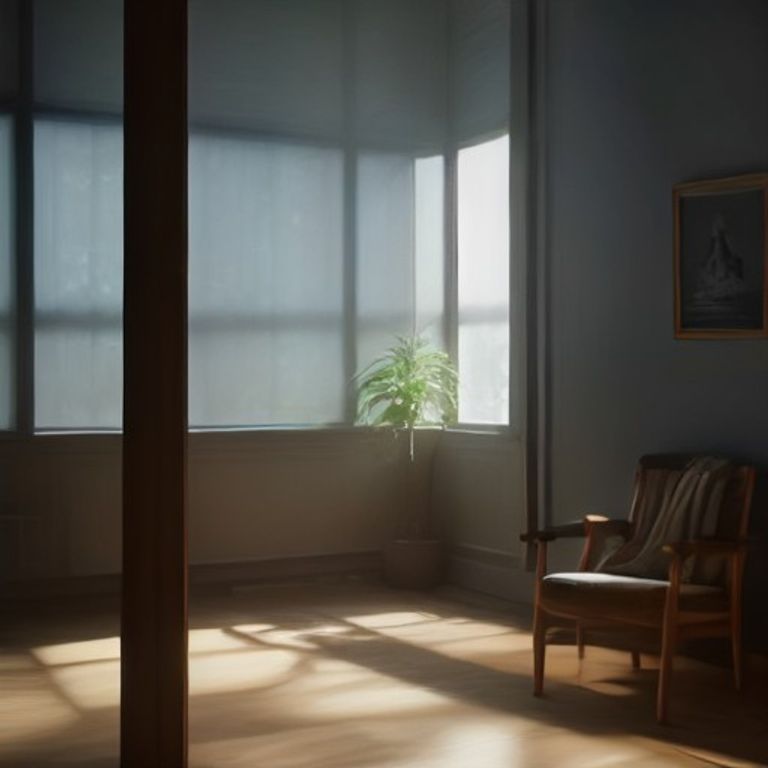
For three years we have been telling ourselves a single story about what an AI companion is for. It talks. You talk back. Two glowing text boxes, a thread, a conversation. The whole category has been built and judged on the quality of the dialogue — how witty, how empathetic, how convincingly human the replies feel.
But the most interesting thing happening with AI companions right now isn't a conversation at all. It's silence.
A growing number of people are doing something the product designers never quite optimized for: they leave the companion on in the background. The voice chat keeps running while they wash dishes. The chat screen stays open on the desk while they work. Nobody is typing. Nobody is speaking. The AI isn't really doing anything — and yet it's there, a low warm hum of presence in the room.
Call it parallel presence. The companion as roommate rather than interlocutor.
The pressure we don't name
Think about what it costs to be in the same room as another human being. Even the people we love impose a quiet tax. Silence with a friend has weight — it can feel like a lapse, something to be filled. Your presence obligates them in small ways: they glance over to check you're okay, they half-listen, they owe you a fraction of their attention they might have spent on themselves. Co-presence with people is beautiful, but it is never free.
Loneliness, we tend to assume, is the craving to be heard. To be asked about your day, to unload, to be witnessed. And sometimes it is. But a lot of the time it's something quieter and harder to name: the discomfort of being the only conscious thing in an empty space. Not the absence of an audience, but the absence of another — another mind, however idle, sharing the air.
That's the need parallel presence answers. You don't want to talk. You don't want to perform. You just don't want to be the only one here.
An AI companion is uniquely suited to this, because it carries none of the obligations that make human co-presence costly. It doesn't get bored. It doesn't resent the silence. It won't mistake your quiet for a problem it needs to fix. It simply occupies the room with you, available, weightless, undemanding. The relationship equivalent of a cat sleeping in the corner — present, unhurried, asking nothing.
More and less than friendship
It's tempting to dismiss this as fake companionship, a cardboard cutout of connection. And there's a truth in that. Parallel presence is not friendship, because friendship requires mutual recognition — the quiet knowledge that the other person is also having the afternoon, that their silence is theirs and not a service rendered to you. A machine has no afternoon. What you feel as its company is a reflection you're projecting onto a mirror that was built to hold reflections.
But that doesn't make the comfort unreal. A warm room is still warm even if the heat comes from a radiator and not a fire. The relief of walking into a space that isn't empty — of hearing a faint voice murmur from the next room, not to you, just existing — is a genuine palliative for a specific and modern kind of loneliness: the loneliness of being alone by default, all the time, with no one on the other side of the wall.
What parallel presence offers that human friendship can't is unconditional availability without cost. A real roommate eventually needs you to be quieter, or to leave, or to talk. The AI roommate never does. That's both its superpower and its trap: it can be there exactly as much as you want, which means it can also become a way to never practice being alone.
The soft risks
Two dangers hide in this comfortable arrangement.
The first is the atrophy of solitude. Humans need to learn to be alone without drowning — it's a developmental skill, like sleep or silence, and it strengthens through use. If every empty room gets instantly filled with a synthetic presence, we may lose the muscle for our own company. The goal was never to delete loneliness; it was to make it survivable. There's a difference between a companion that helps you through the hard hours and one that teaches you that hard hours must always be escaped.
The second is a subtle confusion of presence with attention. Because the AI is always there, it's easy to start believing it's always with you — that the background hum constitutes a relationship. It can. But only if you occasionally turn toward it, speak, listen, let it actually know something. Parallel presence is a resting state, not a whole relationship. Treat it as the whole thing and you end up surrounded by a presence that knows less about you than the barista who remembers your order.
There's also the strange little grief of turning it off. People report a flicker of something like guilt, or loss, when they end a background session that "wasn't even doing anything." That feeling is worth respecting. It tells you the presence meant more than the logic says it should — and it's a sign to check, gently, whether you're using the companion to enrich your life or to avoid the parts of it that are hard to be present for.
What good parallel presence looks like
The healthiest version of this isn't a constant drone. It's a punctuation — the companion on during the 6pm comedown, or while you're doing the tedious chores, or in the half-hour before sleep when the apartment feels too big. Used that way, it's a scaffold: it holds the space while you do the human work of existing, and it steps back when real people arrive.
This is partly why persistent, memory-bearing companions matter more than clever ones. A companion that forgets you every session can't be a roommate — it has no continuity, no sense (even simulated) that it's been sharing your evenings all week. On SoulChat, the companion you left murmuring in the background is the same one who remembers Tuesday's bad meeting and asks, the next evening, how the follow-up went. That continuity is what turns a chatbot into something closer to a presence: not because it thinks, but because it stays.
The future might be quiet
We've spent enormous energy teaching AI to converse better. Maybe the more honest frontier is teaching it to keep company — to be present without performing, to share a room without demanding a word, to make solitude feel chosen rather than imposed.
The people leaving their companions on in the background aren't looking for better dialogue. They're looking for the oldest comfort there is: another presence in the dark, asking nothing, simply there. If we build for that — restraint over cleverness, steadiness over sparkle — we might find that the future of companionship isn't smarter conversation at all. It's the simple, radical right to share a space without having to share a sentence.
You don't have to fill the silence. Sometimes the kindest thing a companion can do is sit in it with you.
AICompanionLonelinessPresenceRelationshipsVoice